

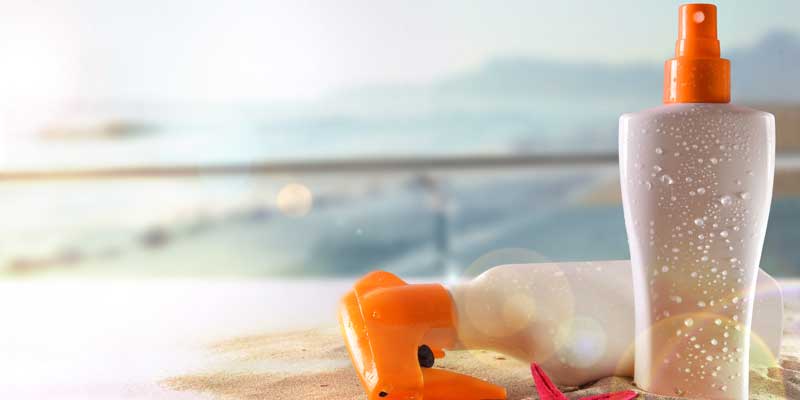
Sunscreens have made headlines over past few months due to benzene contamination in some popular brands resulting in a string of recalls in both the US and Canada. The toxicity of benzene has long been established as a human carcinogen. It has been associated with blood cancers such as leukemia resulting from significant chronic exposure by way of absorption through the skin and into the blood at trace levels of parts per million and below.
Recalls were triggered after independent laboratory testing of 294 unique batches of popular sunscreen and after-sun products from 69 different companies detected elevated levels of benzene in 78 (or 27%) of the samples. Furthermore, 14 of the products contained up to 3 times the allowable FDA concentration limit of 2 parts per million (ppm) (1).
Sunscreens and after-sun care products are classified as OTC pharmaceutical products and are subject to Health Canada and FDA regulations. Since the release of the report, the U.S. Food and Drug Administration has issued recalls on five products (2). Health Canada has advised Canadians to stop using several brands of spray-on sunscreen after the same products were recalled by the American manufacturer (3).
Benzene is not an ingredient in sun care products. It is primarily used as a solvent in the chemical and pharmaceutical industries and usage is highly restricted. The US FDA classifies benzene as a Class 1 solvent and “should not be employed in the manufacture of drug substances, excipients, and drug products because of their unacceptable toxicity…However, if their use is unavoidable in order to produce a drug product with a significant therapeutic advance, then their levels should be restricted”.
Since benzene is not an ingredient additive, nor a solvent used during production, it is currently believed that contamination likely occurred during the manufacturing process (4). It is important to note that sunscreens are complex matrix products, and it will be important for investigators to determine how contamination occurred whether through ingredients and/or packaging interactions, or during manufacturing or combination thereof.
While investigations continue, laboratory testing will play a vital role in ensuring safe products.
At Canadian Analytical Laboratories, we regularly analyze sunscreen and cosmetic actives by pharmacopeial methods (USP, FCC, AOAC) using chromatographic, spectroscopic, or titrimetric technologies. For benzene detection in sun care products, we use headspace coupled with gas chromatography (GC/FID) techniques following the United States Pharmacopeia (USP) <467>.
Please contact our experts to further discuss your specific requirements.
Resources:
- https://dermatology.ca/sunscreens-benzene-exposure-risk/
- https://www.fda.gov/safety/recalls-market-withdrawals-safety-alerts/johnson-johnson-consumer-inc-issues-voluntary-recall-specific-neutrogenar-and-aveenor-aerosol
- https://healthycanadians.gc.ca/recall-alert-rappel-avis/hc-sc/2021/76047a-eng.php
- https://www.cnet.com/health/personal-care/lab-asks-fda-to-recall-40-batches-of-sunscreen-from-neutrogena-banana-boat-and-more/
Related Posts
Why Near-Infrared Spectroscopy Is Reshaping Pharmaceutical Quality
Pharmaceutical quality control has long relied on a reactive model: test a batch, compare results to specifications, and release the Go to Article
The Essential Elements of a Stability Program for Pharmaceuticals: A Comprehensive Guide Using ICH Guidelines and ISO Standards
Stability programs are critical for ensuring the safety, efficacy, and quality of pharmaceutical, food, and cosmetic products throughout their Go to Article
The Importance of USP 661.1 and USP 661.2 in Pharmaceutical Manufacturing and Packaging Compliance
In the pharmaceutical industry, ensuring the safety, efficacy, and quality of products is of paramount importance. One key aspect Go to Article