


When people think about supplement testing, they often picture a Certificate of Analysis stamped “Pass.” For years, that was the gold standard: run the required assays, confirm the batch meets specifications, and move the product into distribution.
Going forward, that simple model no longer holds. Both Health Canada and the U.S. Food and Drug Administration (FDA) have transformed how Natural Health Products (NHPs) and dietary supplements are verified, labelled, and controlled.
Compliance today isn’t just about passing a test. It’s about proving that a product will remain safe, effective, and accurately represented from production to expiry.
Canada: Regulation Starts at the Label
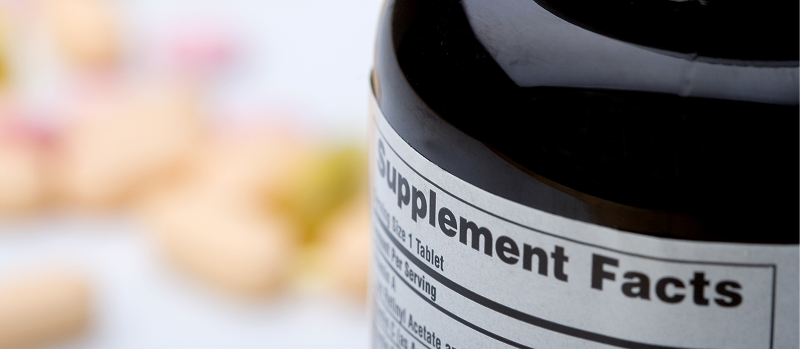
In Canada, reform starts not in the lab, but on the label. Health Canada’s Improved NHP Labelling Initiative introduces standardized Product Facts tables, much like Nutrition Facts on foods. These tables require plain-language descriptions of active and inactive ingredients, dosage instructions, allergens, and known risks.
The transition deadline for most products is June 22, 2028, but manufacturers introducing new SKUs will feel the pressure much sooner
For testing laboratories, this shift has major implications. Every claim printed on a label, from potency to allergen-free statements, must be backed by verifiable data.
If a label says 600 mg of ashwagandha root extract, labs must confirm not only the initial potency but also stability over time. If a product claims to be free from common allergens, those claims must be supported by validated testing methods, not supplier documentation.
The lab becomes the label’s invisible backbone. Without rigorous verification, labels risk becoming liabilities.

United States: Expanding Oversight and Tightening Limits
The FDA’s Human Foods Program Guidance Agenda for 2026 continues to redefine expectations. The agenda prioritizes guidance documents on contaminant limits (heavy metals), natural colour additives, and even poppy seed alkaloids, niche issues that nevertheless highlight how detailed regulatory scrutiny has become.
For supplement manufacturers, the focus remains on contaminant control and identity verification under 21 CFR Part 111. Yet warning letters show that many still rely too heavily on supplier paperwork instead of lab data. The message is unmistakable: identity must now be confirmed with scientifically valid testing.
At the same time, the FDA’s Closer to Zero initiative — originally focused on baby foods — has pushed detection limits lower across multiple product categories. Even if supplements are not explicitly covered, the expectations bleed into adjacent categories.
Retailers, advocacy groups, and even class-action lawyers increasingly expect supplement brands to meet or exceed these contaminant thresholds
The regulatory landscape is moving from “minimum compliance” to continuous risk management.
What This Means for Testing Laboratories
This regulatory evolution changes what “testing” means in practice. It’s no longer enough to produce a CoA that confirms a batch was compliant on a single day. Regulators, retailers, and consumers now want answers to deeper questions:
- How was the data generated? Was the method validated for the specific matrix (gummy, liquid, botanical blend), or was a shortcut applied?
- Are results consistent across lots? Can the lab demonstrate reproducibility across seasonal ingredient variation or supplier changes?
- Will the claim still hold at end of shelf life? Is there real-time or accelerated stability data to support the expiration date?
At CAL Labs, we’ve seen growing requests for method validation summaries, stability protocols, and uncertainty estimates alongside standard CoAs. The data itself has become part of a company’s regulatory defence file. Proof that quality is continuous, not conditional.
Case in Point: Heavy Metals and Lower Action Levels
Consider heavy metal testing. For decades, ICP-MS analysis of lead, arsenic, cadmium, and mercury defined compliance. Passing meant levels were below the established thresholds.
But with the FDA’s updated Closer to Zero guidance, the acceptable limits have dropped dramatically. In 2025, new action levels for lead in baby foods were set in the low parts-per-billion range. By 2026, retailers will be informally applying those same expectations to supplement ingredients.
Labs are now expected to validate methods that detect at even lower concentrations, confirm recovery rates for complex matrices, and provide more detailed uncertainty estimates.
A result that “passed” in 2020 may not meet expectations in 2026.
The Label as Legal Proof, Not Marketing Copy
Another way to understand the shift is to view the label as a legal document, not a marketing piece. Every number and claim printed on that label is now subject to verification. If a probiotic claims “10 billion CFU at expiry,” the lab must confirm viability at the end of shelf life, not just at the time of manufacturing.
If a supplement claims to be free from allergens, the lab must run allergen panels sensitive enough to rule out cross-contamination at the regulatory threshold.
For brand owners, the implication is clear: work with your lab early. Stability testing should be designed before label copy is finalized. Allergen claims should be confirmed before marketing materials are printed. Waiting until the end of the process risks expensive relabeling, reformulation, or even recalls.
From Gatekeeper to Partner
What’s most striking about this regulatory evolution is how it’s redefining the role of the laboratory.
In the old model, labs acted as gatekeepers: the checkpoint between production and release. In the new model, they’ve become collaborators in product development, regulatory strategy, and brand protection.
A strong lab partner doesn’t just deliver results; it helps interpret them, design smarter testing strategies, and build defensible data packages that withstand scrutiny. The value isn’t just in the numbers. It’s in the insight and validation behind them.
At Canadian Analytical Laboratories (CAL), this partnership begins long before a product is ready for market. By aligning testing plans with regulatory expectations, stability requirements, and label claims early in development, manufacturers can avoid costly reformulations or relabelling later on. The result is a smoother approval process, faster market entry, and higher confidence in compliance data.
Testing is no longer the end of the process. It’s the thread that connects formulation, production, and market credibility.
Testing as a Strategic Advantage
Regulatory pressure may be driving the shift, but forward-looking brands see opportunity in it. Continuous verification, matrix-specific validation, and traceable data do more than satisfy regulators — they build trust with retailers and consumers who want proof that products deliver what they promise.
The brands that approach testing as an investment rather than an obligation are setting a higher standard for the entire industry. They’re turning scientific rigour into a competitive edge.
At CAL Labs, our goal is to make that science accessible, helping quality teams turn data into decisions and compliance into confidence. Because in 2026, testing isn’t just about passing a standard. It’s about proving your brand’s integrity, every step of the way.
If you’d like to discuss your supplement testing needs, reach out to our laboratory today.
References
- Health Canada — Improved Natural Health Product Labelling: Product Facts Table and Allergen Labelling (2024): https://www.canada.ca/en/health-canada/services/drugs-health-products/natural-health-products/labelling-modernization.html
- U.S. Food and Drug Administration — Human Foods Program Guidance Agenda (2026): https://www.fda.gov/food/food-guidance-regulation/human-foods-program-guidance-agenda
- U.S. Food and Drug Administration — Closer to Zero: Action Levels for Lead in Foods (2025): https://www.fda.gov/food/chemical-contaminants-food/closer-zero-action-plan-baby-foods
- Environmental Working Group — Consumer Product Safety and Contaminant Reports (2025): https://www.ewg.org
Related Posts

The Importance of USP 661.1 and USP 661.2 in Pharmaceutical Manufacturing and Packaging Compliance
In the pharmaceutical industry, ensuring the safety, efficacy, and quality of products is of paramount importance. One key aspect Go to Article

Stability Testing for Cannabis
Stability testing is essential for establishing “best before” dates for the purpose of communicating the quality and safety of Go to Article

Benzene Detection in Sunscreen Products
Sunscreens have made headlines over past few months due to benzene contamination in some popular brands resulting in a Go to Article